Millions have experienced the magic of Roald Dahl, but only a lucky few actually get to step into a world of pure imagination for Wonka’s The Golden Ticket.
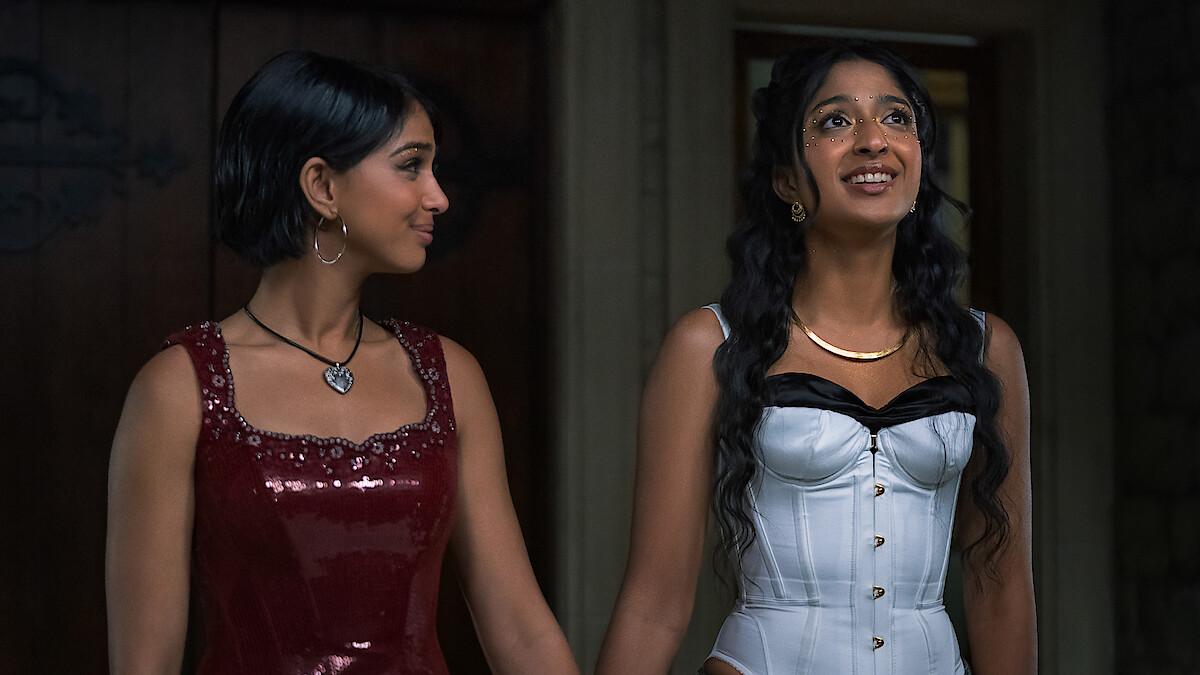
“We felt a responsibility so that when you walk in, you recognize it, and you feel at home there,” set designer Chris Batson tells Tudum about building the world of the new reality competition series. “With a movie, half of this would be green screen, and it’s done in post. These contestants got to see it for real.”
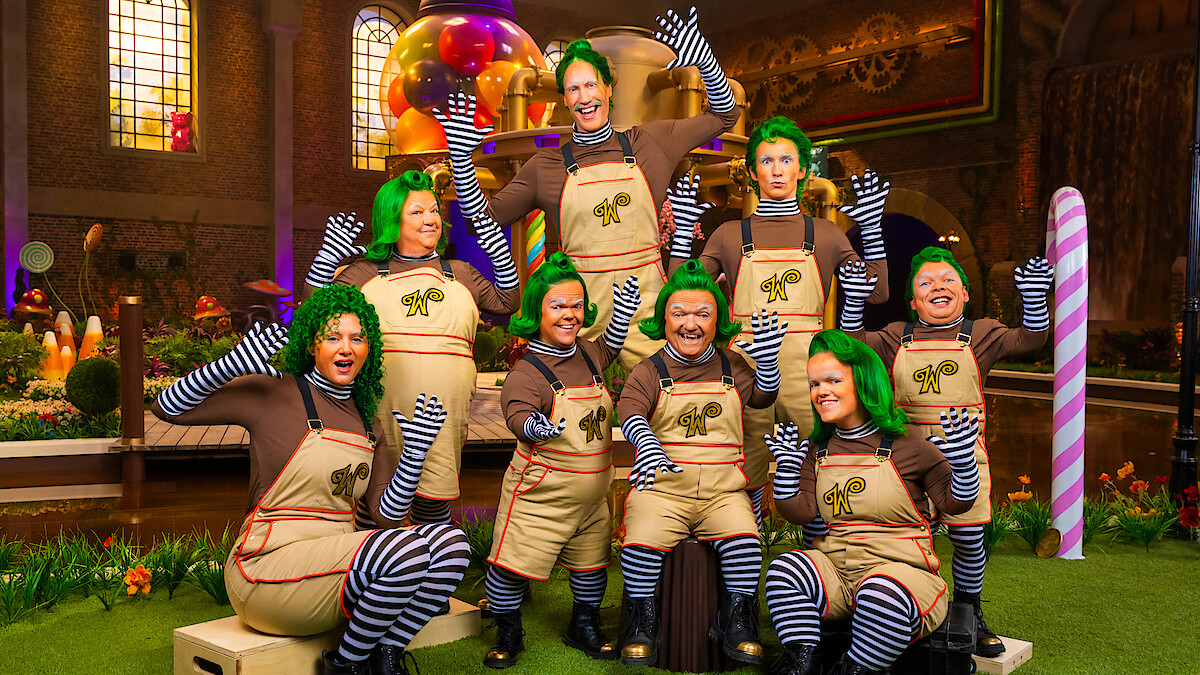
Culinary artisans, magic consultants, and hundreds of craftspeople worked for months to update Dahl’s vivid original vision — from the chocolate waterfalls and edible wallpaper to everlasting candy and golden eggs — for the screen. The Chocolate Room became an edible wonderland, with raspberry-flavored flowers and candied apples that could be plucked from a tree. Contestants magically appeared (and disappeared) throughout the factory through the power of practical illusions. And even the Oompa-Loompas got a 2026 glow-up.
But how does it all work — and how did the team behind Wonka’s The Golden Ticket pull it off ? Keep reading for answers to all your burning questions as you watch the new series, streaming now.
Did contestants really find golden tickets?
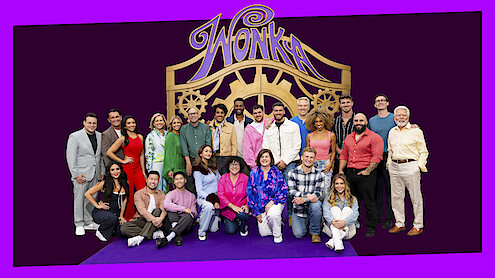
After a nationwide casting call, a few lucky contestants received a chocolate bar but no hint, wink, or clue about whether there was a golden ticket inside — just like in the 1971 movie, Willy Wonka & the Chocolate Factory. “Many people received chocolate bars, but only 12 received the golden ticket,” showrunner Alison Holloway says. In the show’s opening, their reactions feel very real. “There’s excitement, there are tears, there’s joy, there’s disbelief that they’re going to the Chocolate Factory.”
“We were looking for interesting humans who wanted to be in this world and who we wanted to root for and kept our attention,” adds showrunner Emer Harkin.
How big is Wonka’s Chocolate Factory and where is it located?
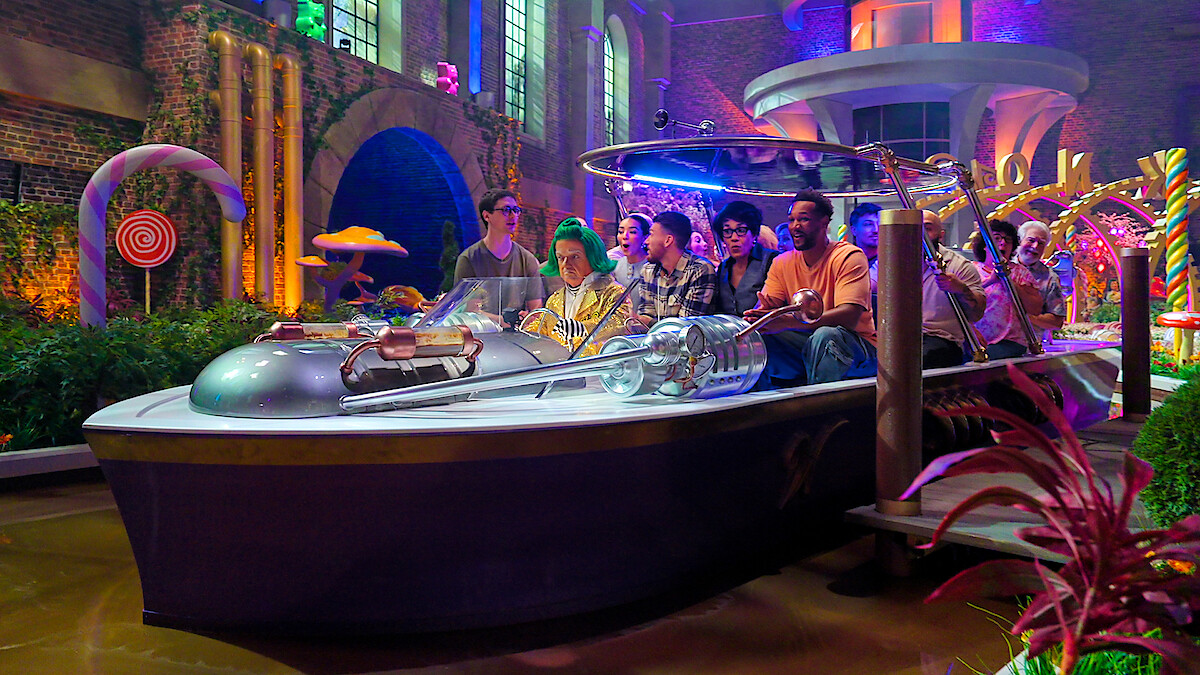
In 12 weeks, the team behind Wonka’s The Golden Ticket built the biggest set ever — 88,000 square feet across three studios — in Gold Coast, Australia. “The scale of this space is unlike anything that I believe has ever been created in the television competition space,” says Harkin. “We’ve got 37,000 square meters of brickwork that was put up on our walls to create this factory,” adds Holloway. Plus, 5,843 square feet of synthetic grass covered the factory floor and 10,000 gallons of purple and gold paint were used on the set for a delightful candy-colored coating.
Before embarking on the journey, the first question Batson says the team asked themselves was, “‘What would this chocolate factory be like and how would it evolve?’ That was our angle. We wanted this set to have the bones and the DNA of the 1970s factory that we all know and love.”
That playground was larger-than-life, colorful, and lent a whimsical, Rube Goldbergian aesthetic to Wonka’s machines and creations. “We felt a responsibility [to make sure] that when you walk in there, you recognize it and you feel at home there, but [also that] it’s moved on — and the way we portrayed that was in the machinery,” Batson adds. “Wonka’s a recluse. So the factory wouldn’t be high-tech 50 years on. He would actually develop it in his own style, which is like a steampunk-meets-Victorian style in the machinery and design.”
Is everything in the factory edible?
Everything in the original film’s famous Chocolate Room was edible. Art director Caila Heritage’s team rebuilt the awe-inducing space down to the last tasty detail. “It was a lot of eating cake,” Heritage says. The team had to concoct and test every culinary creation for taste and how it would look on camera. “I’m not complaining,” she adds with a laugh. And yes, the dietary restrictions of the players were flagged in advance so everyone could nibble without incident.
“We tried to find local cake makers that do this professionally and the people that work on shows like Is It Cake? have a pretty good idea of what will hold up and what won’t on camera,” adds Heritage. “So we sourced people that have a good idea of how to make this stuff from the beginning and then let the professional cake makers show us what they have. Then we made some tweaks to flavors and colors.”
A playground for the senses, the set had grass that tasted like lemon-and-lime sour straws, candied apples growing in trees, and hundreds of flowers with countless flavors — toffee, banana, peanut butter, caramel, butterscotch, strawberry, and raspberry. “You would never eat a flower and expect it to be peanut butter,” Heritage says. “Which is the whole point, because it’s Wonka, and it’s weird and different.” In addition to the luscious plant life, the art department also sourced 5,000 gallons of sticky honey and two miles of lickable wallpaper for various challenges.
Is the chocolate river actually made of chocolate?
Well, OK, not everything was edible. While the Chocolate Room does look delectable, the river Holloway calls “27,000 gallons of chocolate goop” isn’t, strictly speaking, snackable. It’s a specially made blend, mixed in Los Angeles and shipped across the ocean in 93 giant vats. According to Blair Adhesives, the series used more chocolate viscosity product than any other film or TV production in Hollywood history. “It took six weeks to get to us,” says Holloway. “We were really worried until it arrived because without a chocolate river, you don’t have a chocolate factory.”
How did Wonka’s The Golden Ticket re-create Gene Wilder’s voice?
“Gene Wilder’s voice has been in our heads since the beginning,” Holloway says of the man who brought Wonka to the screen. The Golden Ticket has no host. Instead, it has an omnipotent (and occasionally ominous) voice — and only one candidate could do the job. “The only person that could be Wonka is Gene Wilder.”
Getting there meant asking permission from the person who knew his voice best: his wife, Karen, who permitted the production team to re-create Wilder’s humor, whimsy, and tone. “To have that blessing from his widow that this was OK to do was just fantastic,” Holloway says. “You just hope that somewhere he’s looking down on this project and will guide us through.” Karen opened up her garage and found old recordings and audiobooks. “Every sentence, every turn of phrase, every lilt, all the intonation have been very meticulously considered in a really meaningful way,” Harkin says. “It was a laborious but gorgeous process to really nail that Wonka voice.”
Why are the Oompa-Loompas different sizes?
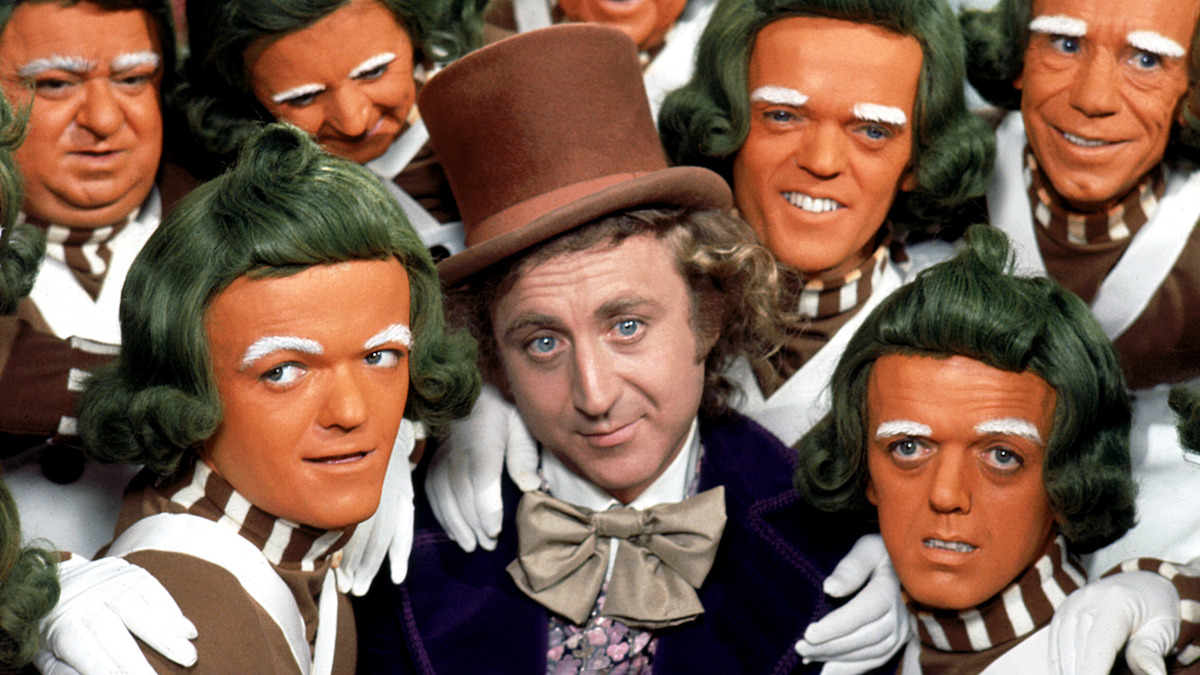
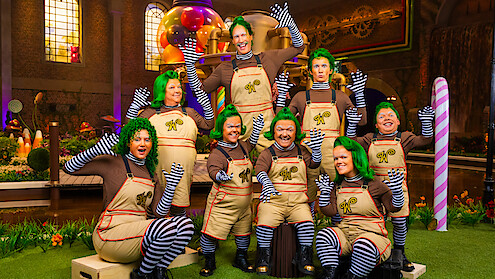
Rusty Goffe, who played an Oompa-Loompa in the original film, returned to help shape the workforce for a new era. “Who better to talk to us about how to depict our Oompa Loompas in a really meaningful and respectful way?” Harkin asks. With Goffe leading the way, the team worked together to create a 2026 version of the Oompa-Loompas. “It was a really collaborative process,” Harkin notes. Rusty encouraged the team to reflect on where we are in the world today. “So we have a modern-day workforce of Oompa-Loompas of varying sizes, just as it should be in life,” Holloway says. “Everyone is welcome.”
Did the contestants really disappear after they ate the golden gumball?
Short answer: Yes. Magic consultant Adam Mada engineered the sleight of hand behind the series’ vanishing acts, including the gumball challenge in the first episode. These magic moments are not camera tricks, says Mada, but practical illusions. There was no smoke, no green screen, and no second takes edited in later. Behind the scenes, Mada had a team of five, each with a very specific job they needed to pull off in order to make the illusion feel real to the contestants. “It’s amazing for the person who remains,” says Mada. “They’re so shocked that they have no idea where their colleague’s gone.” He adds, “We didn’t know who was going to vanish, and we genuinely didn’t know who was going to take the golden gumball.”
Does Wonkavision 2.0 actually transport contestants to the game show?
Wonkavision taught Mike Teevee the hard way not to obsess over a screen. With its 2.0 upgrade, competitors play various game show challenges. Nobody was shrunk, miniaturized, or beamed anywhere.
For the “transport,” Mada conceived a fade-box illusion that didn’t rely on camera tricks or CGI. “The original brief was to create a very clean illusion that worked on camera and also played well with the rules of Wonkavision and the factory in general,” Mada says. “It had to be a very flexible illusion because for each of the games we have anywhere from four to eight people transitioning,” he says. “The illusion works as well for the camera as it does for the real live contestants inside the set.”
Does the elevator really work?
The Wonkavator (or Great Glass Elevator) makes its presence known early on as contestants use it to travel between never-before-seen areas of the factory. Each floor holds various tests and games that challenge each person’s judgments, morals, and delightful deviousness. However — spoiler alert! — the elevators don’t actually move up and down. It’s all special effects and lights that make it appear as though the elevators move in every direction in the Chocolate Factory. It’s like magic!
What’s the prize for winning Wonka’s The Golden Ticket?
A lifetime supply of money! This translates to $3 million, assuring the winner a six-figure annuity for 30 years. Best to read Wonka’s extremely fine print though, just to be safe.